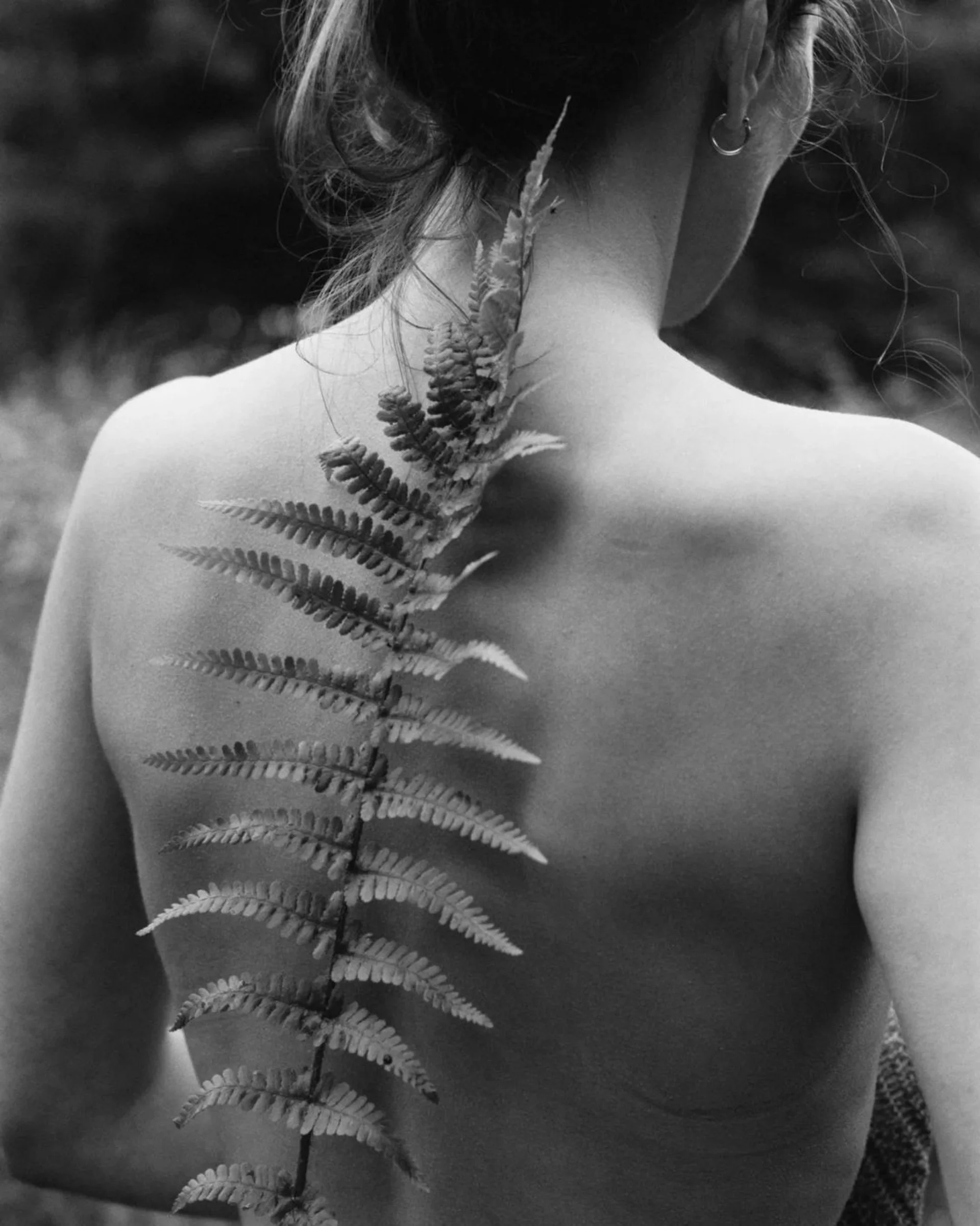
In East Asian medicine, the element of Water [水; shuǐ] expresses itself in both yin and yang forms within the body. The Kidneys correlate with the yin of Water. They hold our deepest reservoirs of energy, vitality, and stamina. In nature, the yin of Water mirrors the vastness of the ocean and energetically, correlates with out our capacity to meet uncertainty with awe, wonderment, and inner stillness rather than fear. The Bladder correlates with the yang expression of Water. In nature, the yang of Water is reflected in the vaporization and distribution of water against gravity. Energetically, it governs how our depth is distributed at the surface of the body.
This relationship becomes especially relevant in winter, when seasonally the element of Water predominates and the body is asked to conserve energy while remaining responsive to the world.
In this article, I’ll explore the Bladder [膀胱; pángguāng] in East Asian medicine—its pathway along the back body and spine—and how its nature shapes our structure and posture, the surface of the body (skin and pores), our boundaries, our discernment – primal ‘yes’ or ‘no’ decision-making, and self-cultivation. Through learning about the Bladder meridian, you’ll understand your own body more deeply, especially your capacity to meet life with supple strength rather than by bracing with rigidity or collapsing from exhaustion or by becoming overly porous to the demands around us.
This is the yang of Water in the body.
It is the strength, a capacity for alert yet calm attention, clarity, and responsiveness that allows the body not only to rest, but to rise.
[*In keeping with academic convention in Classical Chinese medicine, throughout this article I will use capital letters for certain words when referencing meanings that are best expressed through the original ancient pictographic Chinese characters. Capitalized terms reflect a broader word-field of meaning that includes symbolic, mental, emotional, spiritual, and physiologic dimensions. For example, Bladder refers to the Chinese medicine organ network, its meridian, and energetic qualities, while bladder refers to the Western anatomical organ.]
The Pathway of the Bladder Meridian
In this system, the Bladder is not simply a repository for urine, it is a sophisticated energetic network charged with circulating water against the pull of gravity, disseminating the clear and pure energy of water to the surface and releasing waste downwards. It is responsible for guarding the exterior surface of the body, regulating our interface with the external world, and supporting our evolution—from reflexive instinct to cultivated awareness.
The Bladder channel is the longest meridian in the body, with 67 points. It begins at the inner canthus of the eye, ascends the forehead, travels over the head, and then descends the back of the neck. Its two parallel rivers run the entire length of the spine. These twin lines travel through the paraspinal muscles of the back, over the back of the pelvis and glutes, down the hamstrings and calves, across the lateral ankle, and end at the pinky toe.
This dual-line pathway gives the Bladder meridian a uniquely powerful influence over posture, spinal alignment, and the entire back-body fascia network. The measure of rigidity or collapse in the Bladder line can sometimes be a marker of the tone and balance in the parasympathetic and sympathetic nervous systems.
Clinically, the Bladder channel is involved in the following patterns or features in the body:
persistent tension or gripping along the spine
rigidity at the occipital base (base of the skull) or sacrum
tight hamstrings and calves
plantar fasciitis
patterns of bracing, an exaggerated startle response, ticklishness in the paraspinal muscles, excessive fear, or hypervigilance
or conversely, collapse, slumping, or an inability to hold oneself upright (hypermobility would relate here)
These are not merely musculoskeletal patterns — they are expressions of a deeper energetic conversation about the body’s relationship to fear, self-support, and boundaries between the internal and external world.
The Bladder as Regulator of the Exterior: Boundaries, Surface Energy + the Somatic Yes/No
The Bladder governs the surface of the body — the skin, pores, musculature along the spine and back, and the energetic field that mediates between inside and outside, or “what is me” and “what is not me.”
If you’ve ever experienced the physical sensations of an intense fear response (e.g. goosebumps, hairs standing on end, sudden droplets of sweat at the surface, the stiffening of the back body and upper shoulders that can last for minutes or perseverate for months during a stressful period), then you’ve experienced the physical activation of the Bladder channel.
At a more subtle level, the body’s ability to discern between a healthy, safe ‘yes’ and an unsafe, or unappealing ‘no’ is a function of the Bladder channel. This is our body’s innate boundary intelligence in action: a somatic decision-making system that, if we listen to it, can help us understand things that bring us deeper into vitality and those that overstimulate but potentially deplete us.
Tightness, stiffening, leaning away: these are the body’s way of communicating our primal “no” to us.
Conversely, a relaxed, warm, supple, spacious back body is the somatic yes.
Contemporary somatic practitioners sometimes refer to these subtle cues as a way of “consulting the oracle of the body”. And yet, traditional practitioners of East Asian medicine have been in touch with this intelligent process for thousands of years.
When the Bladder system is healthy, this yes/no distinction is immediate, uncomplicated, and accurate. When depleted or strained, boundaries become either too porous (difficulty saying no, collapsing into exhaustion) or too rigid (hypervigilance, bracing, leaping into reactivity).
The Bladder Channel + the Medicine of Cold Water
In a sense, the way the body responds to extreme cold parallels the physiologic responses of the fear response. Whether we’re attempting a cold plunge or just braving subzero temperatures in the winter, the quick mobilization of the body’s circulatory system from open and relaxed pores on the surface of the body and warmth at the periphery, to immediately prioritizing protection of the vital organs is a function of the Bladder channel
Although it seems paradoxical, the classical texts describe that “nothing warms like cold water,” because the aftereffects of cold-water immersion, when done safely and appropriately, beautifully illustrate Bladder physiology:
tightened, luminous skin tone
pores sealed firmly against external invasion
clear, bright awareness in the head
strengthened boundaries at the surface
renewed vitality, stimulated metabolism, and sexual/reproductive warmth
a willingness to sacrifice comfort for clarity
Cold water strengthens the surface, sharpens discernment, and refreshes the spirit.
When Cold Water Immersion Is Not Appropriate
For women before or during their moon time, the Bladder channel and its surface-regulation functions are already taxed. Cold plunging at this time can over-contract or destabilize the delicate full-body circulation process required for menstrual flow and is best avoided.
This mirrors broader Chinese medical principles in general: when the Bladder network is already performing a complex regulatory task, avoid forcing additional opening/closing of the pores. If you are already feeling depleted, have a weakened immune system, or other complex medical conditions that comprise your health, the risks of cold exposure may outweigh its benefits. A better option to nurture Bladder channel physiology and overall health may be to protect the body’s internal warmth (yang). Gentle sweating through safe sauna would be a better way to build up the body’s reserves.
The Bladder Channel + Luminous Skin: Healthy Sweating + Regulation of the Opening + Closing of Pores
Because the Bladder governs the surface, it helps regulate the opening and closing of pores, the ability to sweat appropriately, and the luster and tone of the skin.
A harmonious Bladder network creates:
skin that looks vibrant, toned, and full of life
appropriate sweating that supports temperature regulation
pores that open when the body needs to release heat
pores that close firmly when the body needs to conserve warmth or protect itself
This “flexible armor” is one of the primary indicators of Water element health in the winter months.
The Stakes of an Imbalanced Surface (Bladder Channel Pathology)
When the Bladder system is taxed, we may see:
excessive tension at the neck and shoulders
recurrent chills or catching colds easily
constant dripping nose, cold fingers and toes
alternating sweating/no sweating
clammy skin or dryness
sensory overwhelm
chronic boundary violations, or an inability to say ‘no’
frozen back-body musculature from fear or hypervigilance or poor, weak postural tone
The Bladder is the shield of the body. But it must be a living shield, not a brittle one.
Supple (Not Collapsed or Rigid)
A healthy Bladder sinew channel expresses:
uprightness without effort
a long, elastic back body
rootedness through the legs
a sense of inward orientation rather than outward chase
immune vitality: able to fend off and resolve illnesses
Posture, Structure, and the Evolution of Humanity: The Bladder Channel as the Back Body “Scaffolding”
In classical texts, the Bladder is associated with the uprighting of the spine – a process that is important over the course of our daily life rising out of bed into the day, or from the crawling of infancy to the gradual progression to full-grown standing and walking upright, or over the long arc of human evolution from quadruped to biped.
It is said that the Bladder channel “lifts us up by the inner corners of the eyes,” (acupuncture point Bladder 1, the beginning of the channel, is located at the inner canthus of the eye). This is one reason the Bladder channel begins at the eye: where our gaze goes, the Bladder channel follows.
Our Eyes Determine Our Posture
Modern neurophysiology supports the finding that where the eyes orient, the suboccipital muscles (small muscles at the base of the skill; think ‘tech neck’) adjust. The suboccipitals dictate head and neck posture; the head dictates the spine; and the spine dictates the entire fascial chain of the back body.
Chasing external information with “hungry eyes” leads to tension and forward head carriage. Just consider the pattern of ‘tech neck’. In the clinic, we often see the upper body and neck pain of chronic computer use is also accompanied by other complaints of feeling disconnected with the lower parts of the body. We also see a loss of spontaneous and more three-dimensionally mediated body movement that is nurtured by taking in variable light (not from screens) and distances (natural settings).
Softening the eyes, and practicing a healthy balance between an internally- and externally-oriented gaze, can allow the back body to settle. For example, do you lose yourself in your computer? In your phone? In advertisements that condition you to lose touch with the part of yourself? Or, do you stay connected to your body while you’re doing computer-related work and remember to take full-body breaks?
The Bladder Channel and the Discipline of Self-Cultivation
While the Kidney organ network is said to house the will (zhi 志) and our deep reservoirs of energy and stamina, the Bladder channel expresses the manifestation of the will through our capacity for discipline, routine, and daily self-cultivation.
If Kidney willpower is the internal spark of determination, Bladder is how that determination becomes embodied. This organ network reflects:
the ability to create structure
the discipline to maintain self-cultivation practices
the willingness to nurture uprightness in both posture and morality
the resilience to face fears without collapsing or becoming overly rigid
the ongoing refinement of boundaries and self-respect
The Bladder’s Role in Water Metabolism: Climbing the Heavenly Ladder
Classically, the Bladder is said to “climb the Heavenly Ladder.” This refers to the upward movement of the body’s essential energy—jing (ancestral energy that we come into life with) transformed through qi (our available energy) into shen (spirit), rising through the spine toward the head.
In this model, urination is the byproduct of this ascending transformation: the leftover remnants, water we no longer need after the surfaces have been perfused condenses downward and is expelled as urine.
This upward movement of water in the Bladder channel also contributes to:
surface immunity
warmth
clarity of mind
strength of the spine
resilience in times of fear or uncertainty
It is a vertical circulation of Water, from the deepest stores (Kidneys) to the highest consciousness (spirit).
Water is Life: Returning to the Back Body, Quiet, Discernment, and Inner Gaze
The element of water in the body asks us to find a balance between extending ourselves towards external connections and taking the balanced cue to turn inwards and nourish our reserves. It asks us to discern how much energy we can expend while staying connected to our center and sense of self cultivation. It asks us to soften our gaze and include our own wisdom in our vision. The yang of the water element is about strengthening our boundaries and, in the simplest of yes-or-no decisions, to honor our commitments to ourselves.
A healthy balance in the Bladder Organ Network means:
choosing clarity over reactivity
cultivating an upright rootedness in our center rather than bracing
strengthening boundaries without becoming rigid or over-porous
conserving energy by noticing and removing ourselves from constant overstimulation
allowing the body to guide decision-making from instinctive wisdom
Supporting the Bladder network through seasonally-attuned living allows us to meet life with steadiness, discernment, and an upright dedication to our self cultivation.
You can stay curious about how these principles relate to your own posture, boundaries, and sense of vitality in the winter by noticing the subtle changes in your own body. Of course, I’m always happy to discuss these qualities further in appointments with my patients.